|
The 1964 Alaska earthquake (the Great Alaska Earthquake) was the most powerful earthquake ever recorded in the history of North America, with a magnitude of 9.2.
On Good Friday, March 27, 1964, at 5:36 p.m. local time, the fault line between the Pacific and North American plates ruptured in the Prince William Sound region.
The main shock lasted 3–5 minutes, and the sudden uplift of the seafloor generated tsunamis reaching up to 67 metres. These waves caused most of the destruction and loss of life.
The effects of the earthquake were observed across an area of approximately 250,000 km² in Alaska.
POTENTIAL CONTRIBUTORS IN THE SOLAR SYSTEM
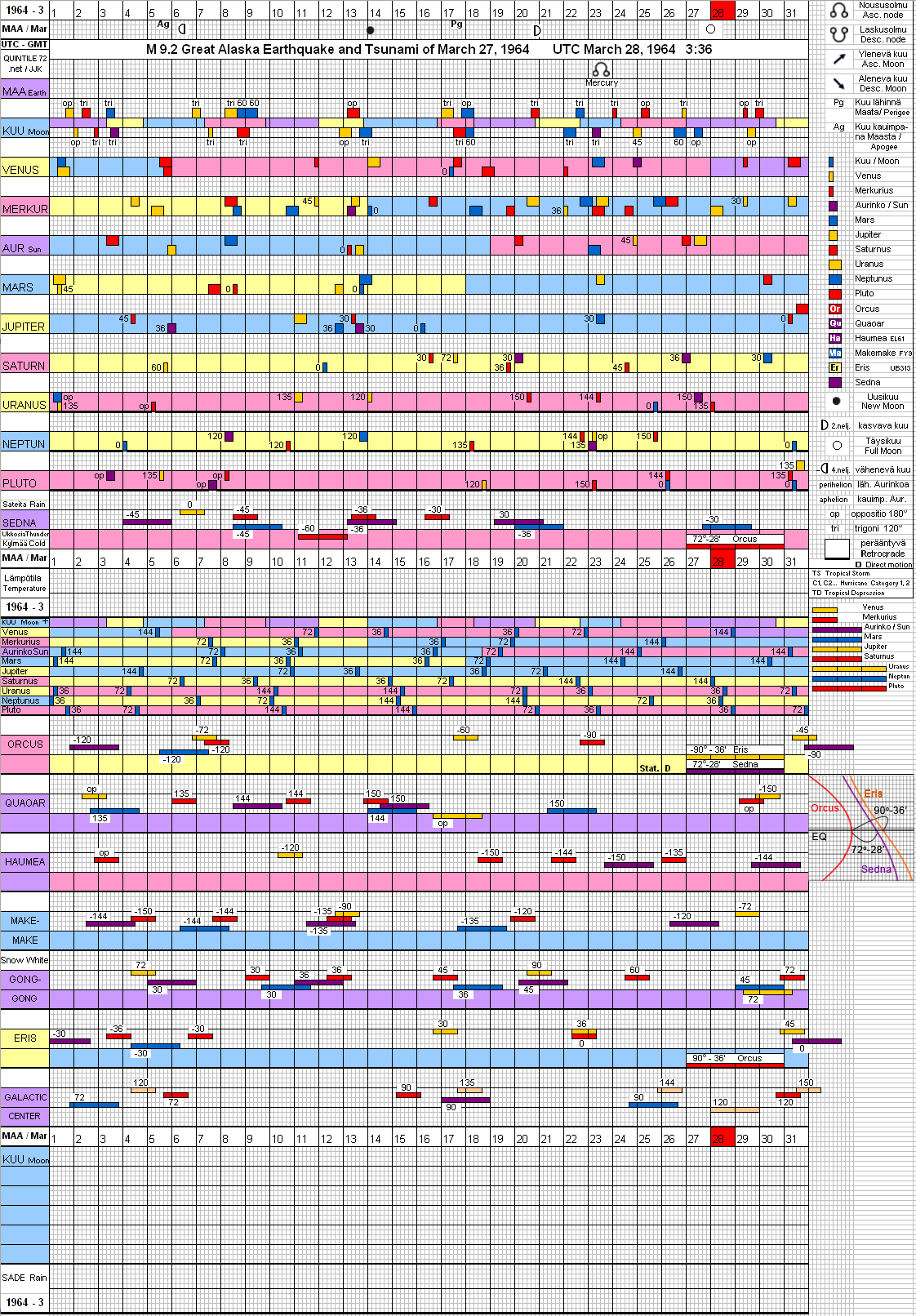
The weather score for March 1964 shows several factors that may have contributed to the conditions leading up to the earthquake.
1. Orcus stationary (Stat.)
The dwarf planet Orcus was stationary at the time of the earthquake.
A stationary phase can amplify its aspects for about a week before and after the exact date.
At the same time, the already strong effects of the slow-moving dwarf planets were further emphasized:
– Orcus–Eris 90° (orb approx. 0.5°)
– Orcus–Sedna 72° (quintile; also approx. 0.5°)
These aspects may increase crustal tension and magma movement, even when they are not exact.
2. Mercury's node on 23 March
Mercury crossed its node (the intersection with the ecliptic) on March 23, only a few days before the earthquake.
A nodal crossing amplifies several types of aspects:
– quintiles (144°)
– aspects that enhance magma movement: 0°, 60°, 120°, 150°
– as well as tension-related 90° angles
In terms of timing, Mercury often highlights tensions that are already elevated.
3. Jupiter – earth–light connections toward the northern zone
Jupiter formed two significant aspects:
Jupiter – Galactic Center 120° (trine)
Jupiter – Gonggong 72°
These earth–light combinations may help explain why the effects were concentrated in northern Earth–light regions, such as Alaska.
Similar directional indications are also present in the aspects of Sedna and Eris.
SUMMARY OF SOLAR SYSTEM INFLUENCES
The purpose here is not to present definitive causes, but to highlight simultaneous planetary structures which, from the perspective of the weather score, likely influenced the timing of the earthquake and may help explain its exceptional strength.
|